SSD vs HDD VPS Hosting: What’s the Difference?
VPS Hosting, short for Virtual Private Server hosting, is a powerful web hosting solution that sits between shared hosting and dedicated servers. In this model, a single physical server is divided into multiple virtual environments using virtualization technology. Each VPS operates independently with its own allocated CPU, RAM, storage, and operating system, giving users far more control and stability compared to shared hosting.
One of the biggest advantages of VPS hosting is resource isolation. Unlike shared hosting, where traffic spikes or issues from other users can slow down your website, a VPS ensures your performance remains consistent. This makes VPS hosting ideal for growing websites, online stores, SaaS platforms, gaming servers, and business applications.
Another key benefit is flexibility. With VPS hosting, users can install custom software, configure server settings, choose their operating system, and scale resources as their project grows. This level of control is especially valuable for developers and businesses that need a reliable and customizable hosting environment.
However, performance in VPS hosting is heavily influenced by the type of storage used. The choice between SSD and HDD storage can significantly impact speed, responsiveness, and overall user experience. Understanding this difference is crucial for making an informed long-term hosting decision.
Contents
Understanding Storage Types: SSD vs HDD
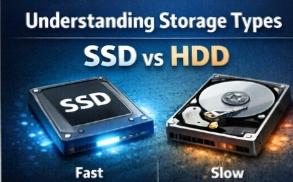
Storage technology is one of the most critical components of any VPS. The two most common options are Hard Disk Drives (HDD) and Solid State Drives (SSD). While both serve the same purpose—storing data—their operation is fundamentally different.
HDDs use spinning magnetic disks and mechanical arms to read and write data. This older technology has been around for decades and is known for offering large storage capacities at lower costs. However, because HDDs rely on moving parts, they are slower and more prone to physical wear over time.
SSDs, on the other hand, use flash memory with no moving components. This allows data to be accessed almost instantly, resulting in significantly faster read and write speeds. SSDs are also more resistant to physical damage, generate less heat, and consume less power compared to HDDs.
In a VPS environment, these differences become even more noticeable. Storage speed affects how quickly your operating system boots, how fast databases respond, and how smoothly applications run. For modern websites and applications that demand high performance, SSD storage provides a clear advantage.
Choosing the right storage type is not just about current needs—it’s about ensuring your server can handle future growth efficiently.
Key Differences Between SSD and HDD VPS Hosting
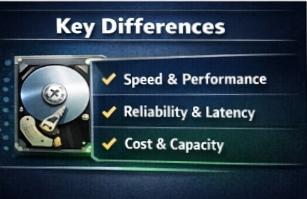
The most noticeable difference between SSD VPS and HDD VPS hosting is speed. SSD-based VPS servers can process data several times faster than HDD-based servers. This results in quicker page loading times, faster database queries, and improved server responsiveness.
Reliability is another major difference. Since SSDs have no moving parts, they are less likely to fail due to mechanical issues. HDDs, with spinning disks, are more vulnerable to physical damage and long-term degradation.
Latency also plays a role. SSD VPS hosting offers much lower latency, which is crucial for applications that require real-time data processing, such as gaming servers or financial platforms. HDD VPS hosting may struggle under heavy workloads, leading to delays and performance bottlenecks.
From an SEO perspective, SSD VPS hosting provides a competitive edge. Search engines prioritize fast-loading websites, and server speed directly affects bounce rates and user engagement.
While HDD VPS hosting may appear more affordable, the performance limitations can lead to hidden costs over time, such as lost visitors or reduced conversions.
Advantages and Disadvantages
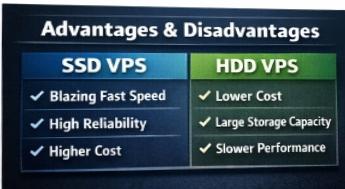
SSD VPS hosting offers outstanding speed, enhanced stability, improved data security, and superior user experience. It is ideal for performance-critical projects and ensures smooth operation even during traffic spikes. However, SSD VPS plans usually come with a higher price tag.
HDD VPS hosting is more budget-friendly and offers larger storage capacity at a lower cost. It can be suitable for simple websites, backups, or file storage. The downside is slower performance, higher failure risk, and limited scalability for growing projects.
Choosing between the two requires balancing budget constraints with performance expectations.
Which VPS Hosting Should You Choose?
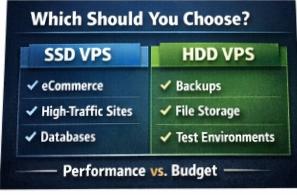
If your project relies on speed, uptime, and user satisfaction, SSD VPS hosting is the better choice. It is well-suited for eCommerce websites, high-traffic blogs, databases, and professional applications.
HDD VPS hosting may be acceptable for low-traffic websites, development environments, or data archiving. However, for long-term growth, SSD VPS provides far better value.
Pricing Comparison: SSD VPS vs HDD VPS
HDD VPS plans generally cost less upfront, making them attractive to beginners. SSD VPS hosting is more expensive but delivers significantly higher performance.
When considering the total cost of ownership, SSD VPS hosting often proves more economical due to better efficiency, fewer performance issues, and improved user retention.
Real-World Use Cases for SSD VPS vs HDD VPS
SSD VPS hosting is ideal for online stores, content-heavy websites, CRM systems, gaming servers, and cloud applications. These use cases require fast response times and consistent performance.
HDD VPS hosting is better suited for backups, file archives, testing environments, and small personal websites with minimal traffic.
Final Recommendations: Which VPS Hosting Is Best?
For modern, performance-driven projects, SSD VPS hosting is the clear winner. It supports scalability, enhances security, and ensures a smooth experience for users.
HDD VPS hosting should only be considered when budget is the primary concern and performance demands are minimal.
Conclusion
Storage type plays a critical role in VPS hosting performance. Choosing between SSD and HDD VPS hosting is not merely a matter of cost—it is a strategic decision that affects speed, reliability, and future scalability.
SSD VPS hosting delivers exceptional performance, stronger data protection, and a superior user experience.
HDD VPS hosting may reduce initial expenses, but it comes with slower speeds and potential reliability issues.
If you are serious about running professional websites, databases, or gaming servers, investing in an SSD VPS is the smarter and more future-proof choice.